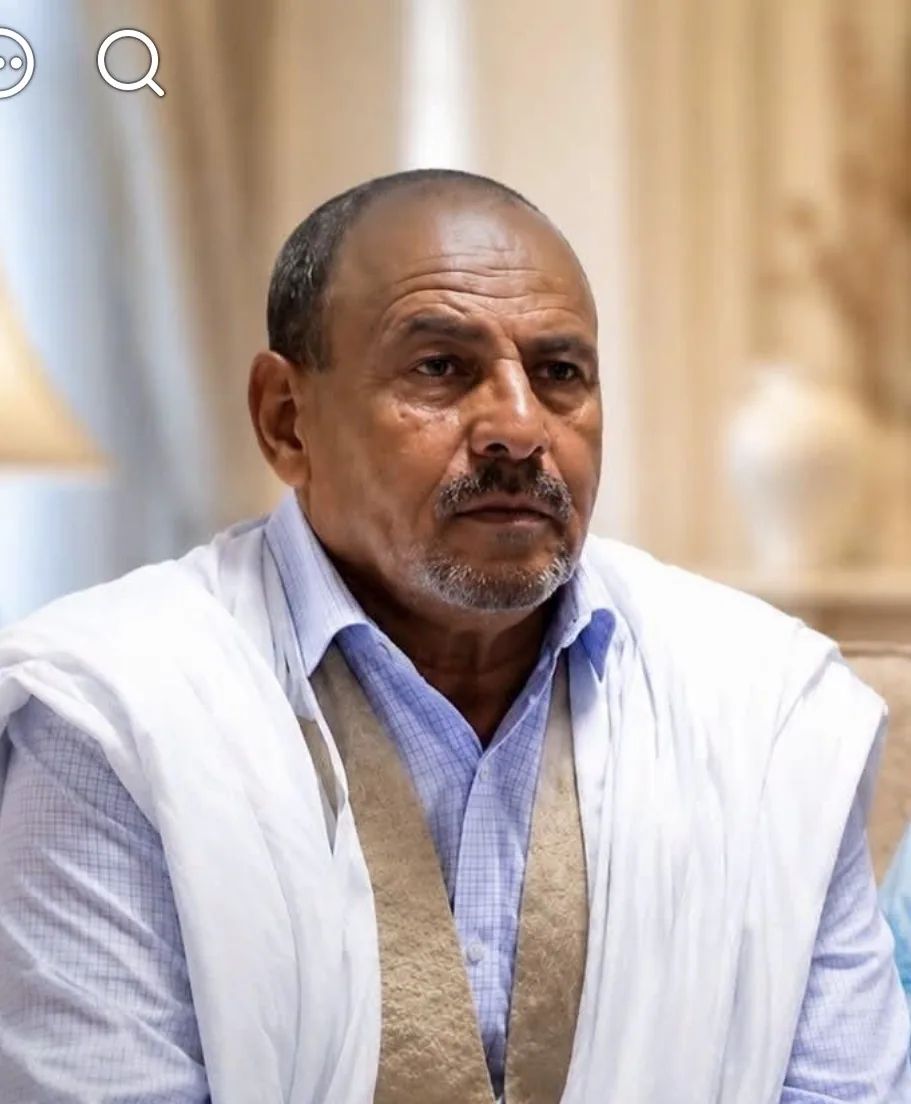
 In prison
Lebatt Ould El Maayouf
member of the Executive Office of the opposition "Mauritania Forward" party
Export PDFSuppression of Opinion in the Digital Space: The Case of General Ould El Maayouf and the Instrumentalization of Cyber Laws Against Political Criticism
In a move reflecting the increasing security grip on the digital space in Mauritania, the Cybercrime Unit of the National Gendarmerie arrested retired General Lebatt Ould El Maayouf on the evening of Wednesday, August 26, 2026. This arrest comes within a tense political context, as Ould El Maayouf is a member of the Executive Office of the opposition "Mauritania Forward" party, placing the incident within a framework of systematic restriction of political opponents and critics of authority.
Details of the Incident and Motives:
Ould El Maayouf was taken from his home following posts published on his Facebook account in which he sharply criticized the current regime's performance. Among the most prominent of his recent positions were:
Criticism of Poor Governance: Ould El Maayouf considered the widespread power outages in Nouakchott not just a technical failure, but evidence of "state erosion and collapse".
Diagnosis of Institutional Bankruptcy:
He criticized the President of the Republic's need to personally intervene in service-related issues, considering it "a glaring sign of poor governance and the dysfunction of the state system," stripping the administration of its essence.
Call for Change:
He described what is happening in the capital as the "clearest expression of state collapse," considering that the country is experiencing "the beginning of the end of a regime that will leave behind no regret".
Perspective on Restricting Freedom of Expression:
The arrest of a former high-ranking officer and political figure for an expressed "word" is considered a flagrant violation of democratic principles. Observers believe this incident is based on a controversial legal arsenal, primarily the "National Symbols Protection Law" issued in 2021, whose broad phrasing is used to restrict freedom of expression and prosecute activists. Furthermore, his summons by the "Cyber Police" highlights the authorities' trend toward digitalizing repression and monitoring political views on social media platforms, turning political disagreement into a criminal case.
Restricting Political Opponents:
The arrest of Ould El Maayouf cannot be separated from his status as a prominent member of an opposition party. His party considered this measure a "dangerous escalation" and a direct targeting of political work. The arrest also led to angry political reactions, reaching the point where the "Mauritania Forward" party suspended its participation in political dialogue in protest of his detention.
General Context of Repression:
The arrest of Ould El Maayouf is not an isolated case; rather, it is part of a trajectory spanning years that has seen continuous restriction of the space for expression in Mauritania. Human rights reports document dozens of cases including:
Members of Parliament: Such as MP Mohamed Bouya Ould Sheikh Mohamed Fadel and two female MPs from the "IRA" movement.
Journalists and Bloggers: Who faced detention and trial for content critical of the authorities or coverage of protests.
Activists and Students: Detained due to posts or videos criticizing government policies.
Conclusion:
The arrest of General Lebatt Ould El Maayouf sends a clear message of intimidation to anyone attempting to criticize the "prestige of the state" or diagnose governance imbalances. Turning political criticism into a "cybercrime" threatens to push society toward self-censorship and undermines fragile democratic gains, necessitating a serious stance from international human rights organizations to protect individuals' rights to express their political views without fear of security prosecution.
Retired Major General Lebatt Ould Mayouf was remanded to prison yesterday evening, Wednesday, September 9, 2026, following a series of legal proceedings that began with his appearance before the Public Prosecution.
—
—
Timeline
—
Documents
—