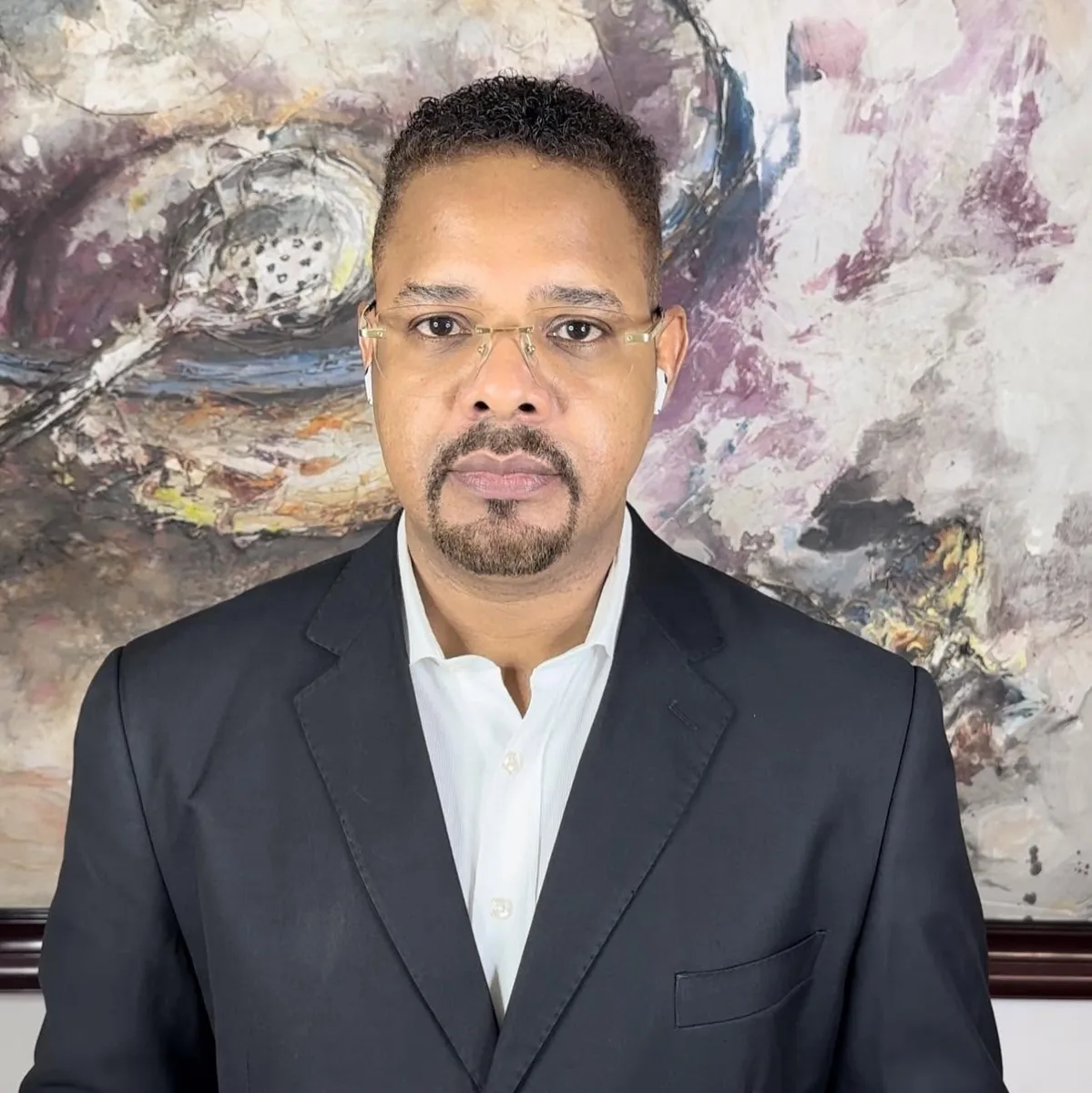
 Released after detention
Hanevy Ould Dehhah
Journalist, director of TTV, and founder of the Taqadoumy news website.
Export PDFWeaponizing Arrest and Apologies: How Executive Power Suppresses Journalistic Criticism
The case of Mauritanian journalist Hanevy Ould Dehhah reveals a clear pattern of the executive branch and its security and administrative agencies exerting pressure on journalists to restrict their freedom to criticise officials and compel them to retract—and publicly disavow—what they have written.
This approach manifests itself on several levels
Using security agencies and administrative reprimands as tools of deterrence
Regulatory bodies and security agencies play complementary roles in placing immediate pressure on journalists. On Wednesday, 14 October 2026, the High Authority for the Press and Audiovisual Media (“HAPA”) reprimanded journalist Hanevy Ould Dehhah over a post criticising the authorities’ practice of replacing one official with another. That same day, cybercrime police in Nouakchott detained him and confiscated his phones over a post criticising appointments made by the Council of Ministers. In the post, he used the popular proverb “Samba sold onions and bought onions” to express, satirically, that the competence or integrity of the appointed officials remained unchanged.
Imposing retraction and public apology as a condition for release
The sequence of events following his detention shows how security pressure translates into the suppression and retraction of an opinion or criticism. Ould Dehhah was released after publishing two successive statements of apology on his Facebook account, addressed to President Mohamed Ould Cheikh El Ghazouani and the public.
- Disavowing intent and retracting: The journalist was compelled to provide detailed explanations stating that he had not intended to personally offend the president, but rather to use the proverb symbolically to convey that appointments remained of the same kind.
- Deleting the critical material: He formally announced that he had deleted the original post and criticised the interpretations imposed on it, constituting a complete retraction under the pressure of detention and the seizure of his phones.
Arrest and prosecution as a response to criticism
Opposition and human rights figures viewed this conduct as reflecting the authorities’ policy towards their critics. Member of Parliament Biram Dah Abeid stated that “the authorities respond to their critics with arrest and prosecution” rather than allowing space for freedom of expression. Statements of solidarity from family members and human rights advocates also stressed that “muzzling people” and silencing critical voices undermine the essence of press freedom and journalists’ dignity.
The continuation of restrictions and the entrenchment of “self-censorship”
This approach is not new in the executive branch’s treatment of Hanevy Ould Dehhah and independent media; rather, it represents a continuation of earlier practices:
- In 2009, he was imprisoned and subjected to restrictions on vague charges such as “offending public morals” while running the Taqadoumy website.
- His defence team accused the public prosecution at the time of “using the judiciary as an instrument wielded by the executive branch against its political opponents and those who speak out”, and of fabricating charges to obstruct his release.
- Detaining journalists and forcing them to apologise and delete their posts entrenches self-censorship through fear of security action and prosecution, hindering critical, independent journalism that freely examines officials’ decisions.
cybercrime police in Nouakchott
cybercrime police in Nouakchott
Timeline
—
Documents
—